
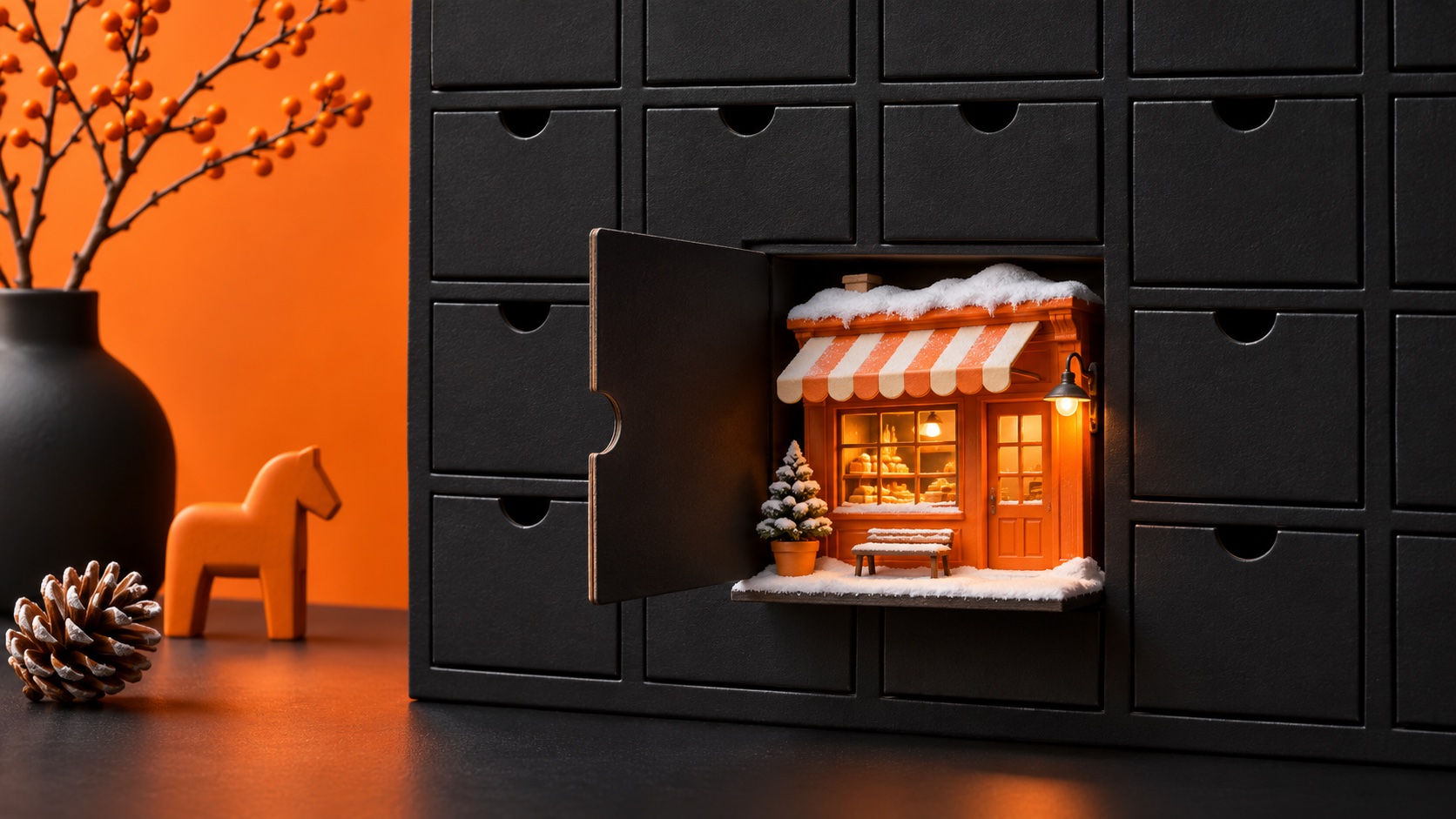
An advent calendar asks for more than a click. It asks people to come back tomorrow. That’s a surprisingly demanding brief, especially if tomorrow looks exactly like today.
Burger King’s 2026 calendar gave viewers a reason to follow the whole sequence. Each of its 12 doors contained a piece of a miniature restaurant. A tiny booth or soda fountain makes sense on its own, but it becomes more interesting when you know what the pieces will build by the end. The Brand Blueprint’s Brooke Yoakam picked up on what makes the format travel on social. Opening the box can become a review, a debate or something people follow over several days. Burger King · The Brand Blueprint
Plan the last door first
Start with what the audience gets for sticking around. A cookware shop could build a December dinner over four episodes, from a make-ahead starter to a dessert that frees up oven space. Each episode should help on its own. By the end there’s a menu worth saving and sending to whoever’s hosting.
If you’re starting just before December, four strong reveals are a realistic brief. Choose a simple recurring format, shoot the instalments together and put the opening dates somewhere people can find them. Give each episode a small payoff and a specific reason to watch the next. An email or landing page can collect everything for people who join late.
Decide whether the series is meant to bring people back, introduce products or sell a bundle. Then look at the behaviour that fits that goal. For a series built around return visits, compare how many people get to later instalments with how many saw the first. A healthy first episode gives you a launch. The later episodes tell you whether you had a series.
